
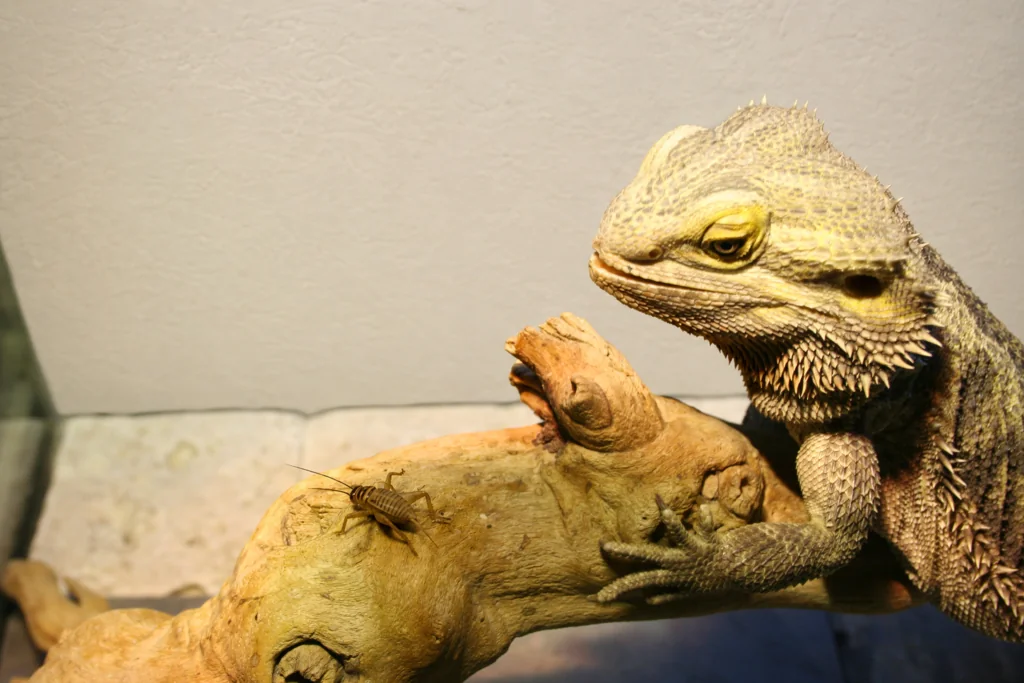
How Many Crickets Should a Bearded Dragon Eat?. Baby bearded dragons can eat a surprisingly large number of crickets, while healthy adults may only need insect meals a few times per week. That huge difference is why generic feeding charts often create confusion instead of helping.
There is no single perfect cricket number that applies to every bearded dragon. Age matters, but so do feeder size, activity level, enclosure setup, growth rate, and overall body condition. Two dragons of the same age may eat very differently without either one being unhealthy.
The goal is not to count every cricket perfectly. A better approach is learning what normal appetite patterns look like at each life stage, recognizing when intake naturally changes, and avoiding some of the common feeding habits that quietly lead to overfeeding or poor diet balance over time.
Why There Is No Single Cricket Number
If you search for how many crickets a bearded dragon should eat, you will find wildly different answers. One guide may suggest a handful of crickets per day, while another recommends feeding sessions that seem almost unlimited. Part of that confusion comes from the fact that bearded dragons do not all eat at the same pace, even when they are the same age.
A fast-growing baby kept under strong heat and UVB may charge after every cricket in sight and still seem hungry afterward. Another dragon of similar size may slow down and lose interest after only a few minutes. Feeder size also changes the math quickly. A dragon eating tiny young crickets may consume far more total insects than one eating larger feeders. Note: feeder insects should be smaller than the space between the dragon’s eyes.
That is why cricket guidance works best as a general range rather than a rigid daily number. Appetite naturally changes as bearded dragons grow, mature, shed, and become less insect-focused over time.
Baby Bearded Dragons Eat the Most Crickets
Baby bearded dragons usually eat far more crickets than older juveniles or adults. During the first several months of life, healthy babies commonly eat roughly 25–80 appropriately sized crickets per day, split across multiple feeding sessions. Some especially active or fast-growing babies may temporarily eat even more.
That wide range surprises many new owners, but rapid growth creates a very strong appetite for protein during this stage. It is normal for a healthy baby to aggressively chase feeders and continue hunting throughout a feeding session.
Most babies do best with 2–4 feeding sessions spread throughout the day rather than one large feeding. Crickets should always be appropriately sized, and young dragons should still have access to fresh greens even if insects clearly remain their main focus early on.
Juveniles Start Transitioning Toward More Greens
As bearded dragons move into the juvenile stage, cricket intake usually begins to level out. Many juveniles still eat eagerly and may consume substantial numbers of feeders, but the nonstop appetite seen in very young babies often starts to ease. A healthy juvenile commonly eats somewhere around 15–50 appropriately sized crickets per day, depending on age, growth rate, and overall activity level.
This is also the stage where greens begin playing a more meaningful role in the diet. Many juveniles still prefer insects if given the choice, but consistent access to greens becomes increasingly important as growth slows and feeding patterns mature.
Most juveniles do well with 1–2 feeding sessions per day rather than the heavier schedule commonly used for babies. Some days may still look surprisingly insect-heavy during growth spurts, while appetite may temporarily dip around shedding before rebounding afterward.
You may also notice juveniles becoming slightly less frantic during feeding sessions. Instead of relentlessly chasing every feeder, many begin pausing more often between insects and spending more time exploring or basking between meals.
Adult Bearded Dragons Usually Need Far Fewer Crickets
By adulthood, cricket intake usually drops much lower than many owners expect. While healthy adults still enjoy hunting insects, they no longer need the heavy protein intake that supports rapid juvenile growth. Many adults do well with roughly 10–30 appropriately sized crickets per week, usually split across a handful of insect feedings per week rather than offered daily. Smaller, less active, or heavier adults may need less, while larger and more active adults may eat somewhat more without it being a problem.
At this stage, greens should become the primary foundation of daily feeding. Crickets and other insects shift into a supplemental role instead of driving most of the calorie intake. Many adults continue acting eager for insects whenever they are offered, but enthusiasm does not necessarily mean they need unlimited quantities.
Most adults do well with insect feedings only a few times per week alongside consistent access to fresh staple greens. Mild seasonal appetite slowdowns are also common, especially during cooler months or periods leading into brumation behavior. A healthy adult may temporarily show less interest in insects while continuing to bask and behave normally overall.
You may also notice adult feeding behavior becoming calmer and more selective. Many adults stop hunting once satisfied instead of chasing every remaining feeder in the enclosure.
How to Tell if You Are Feeding the Right Amount
The healthiest feeding patterns are usually judged over time rather than by a single meal or exact cricket count. A bearded dragon maintaining a healthy body shape, strong activity level, and normal basking behavior is often a better indicator of proper feeding than whether it ate a specific number of crickets that day.
Short-term appetite changes are also common. Many dragons eat less during shedding, especially when loose skin starts building around the face, legs, or tail. It is not unusual for a dragon to ignore insects for a day or two mid-shed and then suddenly eat very heavily once the shed finishes before settling back into its normal feeding pattern.
Mild seasonal slowdowns can happen as well, particularly in older juveniles and adults. Some dragons become less interested in insects during cooler periods or early brumation behavior while still appearing alert and physically stable overall.
Over time, body condition becomes one of the most useful guides. A healthy dragon should look well-filled and muscular without developing obvious fat buildup around the armpits, lower abdomen, or tail base. On the other side, visible hip bones, a thin tail base, or ongoing low energy may suggest the dragon is not eating enough or that another husbandry issue needs attention.
Common Cricket Feeding Mistakes
One of the most common feeding mistakes is offering crickets that are too large. As a general rule, feeder insects should not be wider than the space between the bearded dragon’s eyes. Oversized feeders are harder to swallow and can increase the risk of digestive problems.
Another common issue is leaving uneaten crickets loose in the enclosure for long periods. Crickets often hide under decorations, climb enclosure walls, or remain active overnight, where they may stress or nip at the dragon while it rests.
It is also easy to mistake excitement for true hunger. Many bearded dragons will eagerly chase insects whenever they are offered, even after their nutritional needs have shifted toward a lighter, more greens-focused adult diet. Because of that, adults are commonly overfed insects when feeding decisions are based entirely on how eagerly the dragon chases insects rather than long-term body condition and overall diet balance.
Feeding problems are not always caused by the insects themselves, either. Weak basking temperatures, poor UVB exposure, stress, or illness can all reduce appetite and make feeding behavior look abnormal.
Offering Feeder Variety
Crickets can be an excellent staple feeder, but most bearded dragons benefit from some feeder variety over time. Offering a wider mix of insects helps create better nutritional balance and adds enrichment through different textures, movement patterns, and hunting behavior.
Many bearded dragons also respond differently to different feeders. Some may aggressively chase fast-moving crickets while showing calmer, more deliberate feeding behavior with roaches or worms. Rotating feeders helps reduce over-reliance on any single food source and can make feeding routines more engaging overall.
Common feeder alternatives include dubia roaches, black soldier fly larvae, silkworms, and hornworms used in appropriate moderation. The What Can Bearded Dragons Eat? guide covers how different feeder insects fit into a long-term feeding rotation. As bearded dragons mature, fresh greens should remain the daily dietary foundation, with insects supporting that balance rather than dominating it.