
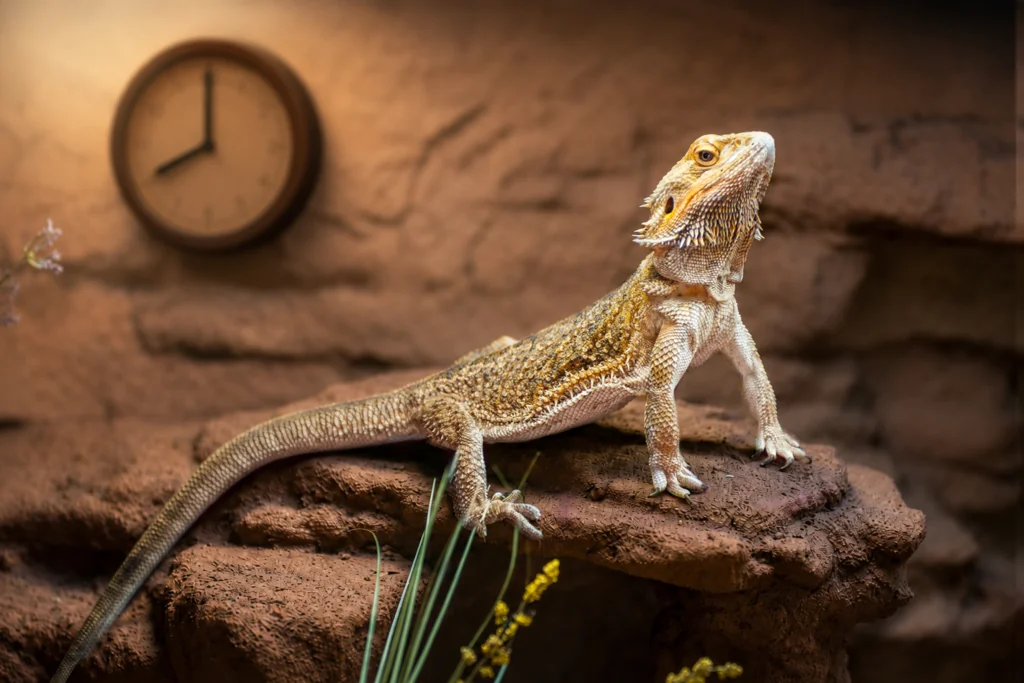
Bearded Dragon Lighting Schedule: Getting the Daily Rhythm Right. Lighting schedules are one of those bearded dragon care topics that seem simple until real life gets involved. The lights came on late. Dinner ran long. The timer was set wrong. Or your dragon is suddenly slowing down in winter and you are not sure whether the schedule should change.
A healthy lighting routine is not just about picking a number of hours. It also affects when your dragon warms up, when they are ready to eat, how they digest, and whether they get a truly dark night for sleep.
The goal is a steady day-night rhythm your dragon can rely on, with enough flexibility to handle normal schedule changes, seasonal shifts, and the occasional mistake.
How Many Hours of Light Does a Bearded Dragon Need?
Most bearded dragons do well with about 12 hours of light and 12 hours of darkness each day. If you are looking for a simple answer, that is usually it.
Some keepers adjust the schedule seasonally, providing a little more light during summer and a little less during winter. In practice, healthy captive bearded dragons generally do well anywhere from about 10 to 14 hours of daily light, provided the schedule is consistent.
Consistency matters more than chasing a perfect number. Turning the lights on and off at roughly the same time each day helps support normal activity, feeding, basking, and sleep patterns. Frequent schedule changes can be more disruptive than choosing 11, 12, or 13 hours of light.
For most owners, a reliable 12-hour schedule is the easiest place to start and the easiest schedule to maintain.
A Simple Daily Lighting Schedule for Most Bearded Dragons
A lighting schedule does not need to be complicated. The goal is to create a predictable daytime period for basking, eating, and activity, followed by a dark, quiet night.
Here’s a simple example of what this might look like:
| Time | Activity |
|---|---|
| 7:00 AM | UVB and basking lights turn on |
| 7:30–8:00 AM | Dragon warms up |
| 8:00 AM onward | Feeding and normal activity |
| Daytime | Basking, exploring, resting, and eating |
| 5:00–6:00 PM | Last major feeding opportunity |
| 7:00 PM | Lights turn off |
The exact times are not important. A schedule running from 8:00 AM to 8:00 PM works just as well as one running from 7:00 AM to 7:00 PM. What matters is that the schedule fits your household and remains reasonably consistent from day to day.
It’s also a good idea to allow your dragon some time to warm up before feeding. Most dragons are not ready to eat immediately after the lights come on. Waiting about 30 to 60 minutes gives them time to become active and reach proper basking temperatures.
Likewise, try to avoid major feedings during the last one to two hours before lights-out so your dragon still has time to bask and digest afterward. For age-based feeding amounts and frequency, see our bearded dragon diet by age guide.
Should UVB and Basking Lights Turn On at the Same Time?
In most setups, yes.
In nature, bearded dragons receive heat, visible light, and ultraviolet light from the sun at the same time. Running your UVB and basking lights together creates a similar daytime environment inside the enclosure.
This also encourages normal basking behavior. When a bearded dragon moves into the basking area to warm up, it receives UVB exposure at the same time.
Some keepers allow the enclosure to warm slightly before feeding, but there is generally no benefit to running UVB on one schedule and basking heat on another. For most enclosures, turning them on and off together is simple and effective. If you are still choosing equipment, start with a proper UVB light for bearded dragons and a reliable basking bulb rather than trying to solve lighting problems with schedule changes.
Why Bearded Dragons Need Darkness at Night
Bearded dragons need a clear distinction between day and night.
During the day, they rely on bright light and heat to support normal activity. At night, they benefit from darkness and cooler temperatures that allow them to rest.
For that reason, visible lights should be turned off overnight. This includes white bulbs, red bulbs, blue bulbs, black bulbs, and other colored “night lights” commonly marketed for reptiles.
Many owners are surprised to learn that bearded dragons do not need a night light. In most homes, normal room temperatures remain well within a safe nighttime range.
If nighttime temperatures become unusually low, use a heat source that produces heat without visible light, such as a ceramic heat emitter (CHE). That allows the enclosure to stay warm without disrupting the natural day-night cycle.
Should Lighting Schedules Change During Winter?
Not necessarily.
Many healthy captive bearded dragons thrive on the same lighting schedule throughout the year. A consistent 12-hour cycle is simple, predictable, and works well for most situations.
Some keepers choose to make gradual seasonal adjustments, increasing daylight hours during summer and reducing them slightly during winter. This can help mimic natural seasonal conditions, but it is not required for normal day-to-day husbandry.
If you decide to make seasonal changes, keep them gradual. Sudden shifts in lighting schedules are more likely to cause confusion than provide any meaningful benefit, so many owners are better off keeping the same steady schedule year-round.
Lighting During Brumation
Brumation is a natural period of reduced activity that some bearded dragons experience, most often during cooler months.
A dragon entering brumation may spend more time hiding, sleep more frequently, and show less interest in food. When this happens, owners often wonder whether they should immediately reduce lighting hours.
In most cases, it is best not to force the process by making dramatic lighting changes. Do not reduce lights just because the calendar says winter. Instead, watch your dragon’s behavior and make adjustments carefully if needed.
Because brumation can sometimes resemble illness, it is also important to ensure your dragon is healthy before assuming reduced activity is seasonal.
Lighting and temperature adjustments during brumation can vary depending on the individual dragon and husbandry goals. For a more detailed discussion, see our complete guide to bearded dragon brumation.
What Happens If You Leave the Lights On Overnight?
It happens.
A timer fails, someone forgets to switch the lights off, or a schedule gets disrupted during a busy evening.
Fortunately, a single night with the lights left on is usually not an emergency. Your dragon may be less active the next day or seem slightly out of routine, but one mistake is unlikely to cause lasting problems.
The simplest solution is usually the best one: return to the normal schedule the following day.
Avoid trying to compensate by leaving the lights off for an unusually long period or making major adjustments. A return to the regular day-night cycle is generally all that is needed.
Why Timers Make Lighting Easier
If there is one piece of equipment that simplifies lighting management, it is a timer.
Timers help maintain a consistent schedule whether you are home, running late, sleeping in on the weekend, or away for the day. They also eliminate one of the most common causes of lighting problems: human forgetfulness.
A timer can automatically turn your UVB and basking lights on in the morning and off at night without any daily effort. Most setups can use one timer for both lights, although separate timers can also work if your enclosure setup requires it.
Many keepers start by manually controlling their lights and eventually switch to a timer after forgetting a few times. Setting the schedule once and letting it run automatically is usually easier for both you and your dragon.
Frequently Asked Questions
What time should I turn my bearded dragon’s lights on?
Any time that fits your household schedule is fine. Many owners use schedules such as 7:00 AM to 7:00 PM or 8:00 AM to 8:00 PM. Consistency is more important than the specific clock time.
What time should I turn my bearded dragon’s lights off?
Choose a time that allows for roughly 10 to 14 hours of daylight, with about 12 hours being a common target. Make sure your dragon has a dark, quiet environment afterward.
How many hours of UVB does a bearded dragon need?
UVB lighting is typically run during the same daytime period as the basking light. For most setups, that means approximately 12 hours per day.
Should the heat lamp stay on at night?
Usually not. Most homes remain warm enough at night that additional heat is unnecessary. If nighttime temperatures fall too low, use a non-light heat source rather than a visible bulb.
Can bearded dragons sleep with lights on?
They can sleep through some light, but they should not have enclosure lights left on overnight as a normal routine. A fully dark night helps support a healthier day-night rhythm.
Do baby bearded dragons need a different lighting schedule?
Not usually. Baby bearded dragons generally do well with the same consistent daytime lighting schedule used for adults, although they often spend more time basking and feeding throughout the day.