
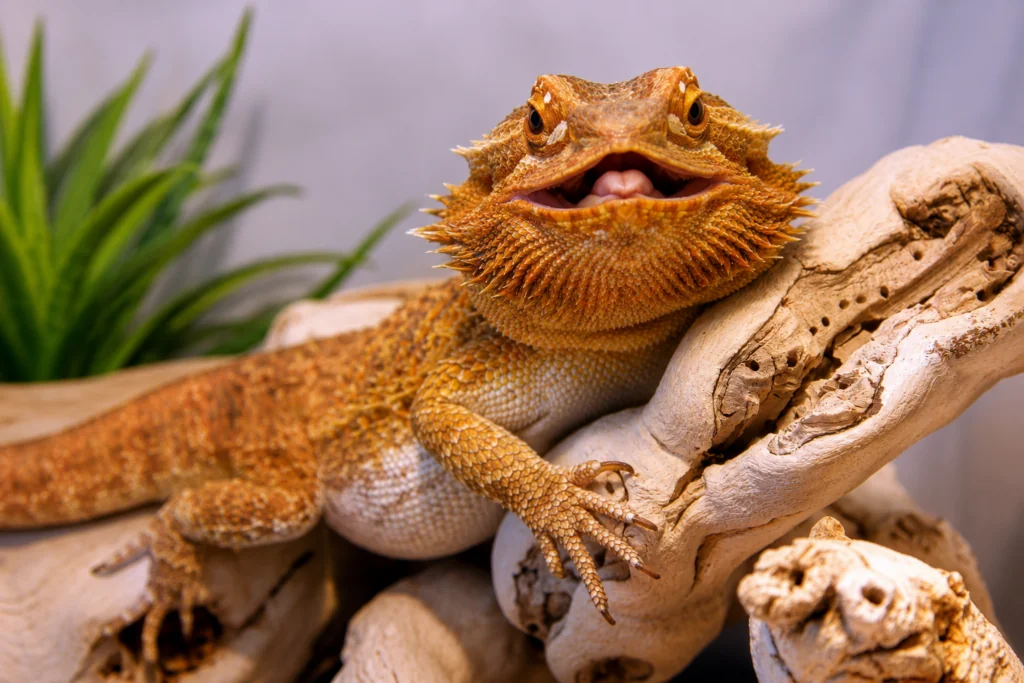
Safe Woods and Branches for Bearded Dragons. Branches give a bearded dragon enclosure structure, climbing opportunities, and a more natural environment than bare platforms and synthetic decor alone. But not every stick belongs in a cage. Some woods carry natural toxins. Others bring pesticide residue, chemical treatments, or hidden parasites along with them.
Most commonly available hardwoods and commercial reptile woods are safe when prepared correctly. The challenge is knowing which ones to avoid — and why — so you can make confident decisions whether you’re buying from a reptile supplier or collecting from your own property.
The recommendations here draw on veterinary toxicology data, documented mechanisms of plant toxicity, and decades of consensus among exotic animal veterinarians and experienced keepers. Where the evidence is uncertain or debated, that’s stated plainly rather than presented as settled fact.
What Makes Wood Safe or Unsafe
Three things determine whether a branch is safe in a bearded dragon enclosure: the tree species itself, whether the wood carries chemical contamination, and whether it poses a physical hazard like splintering or hidden rot.
Some trees produce natural compounds — phenols, terpenes, cyanogenic glycosides, cardiac glycosides — that are toxic to animals. Others are safe at the species level but dangerous because they were sprayed with pesticides, harvested from treated lumber, or collected from contaminated ground. A branch can also be structurally unsound: soft, crumbly, or riddled with fungal growth that has nothing to do with toxicity but still poses a risk.
No controlled toxicological studies have tested wood safety in bearded dragons or other reptiles. Recommendations rely on veterinary toxicology data from other species, documented mechanisms of plant toxicity, and decades of accumulated experience from exotic animal veterinarians and keepers. That evidence is strong enough to guide responsible decisions — but it isn’t the same as species-specific testing. When a wood’s safety is uncertain, the principle is simple: when in doubt, leave it out.
Safe Woods for Bearded Dragon Enclosures
The woods below are widely used in bearded dragon enclosures with no documented safety issues. No formal toxicological studies exist for these species in reptiles, so these recommendations rest on the absence of known toxic compounds, long-standing practical use, and general knowledge of wood chemistry rather than formal safety testing. That track record is meaningful, but it isn’t equivalent to species-specific research — a distinction worth keeping in mind as you evaluate options.
Two categories are worth knowing: woods sold commercially for reptile enclosures, and hardwoods you can collect yourself.
Most commercial reptile woods come pre-cleaned and heat-treated, which removes the identification and sterilization burden entirely.
- Manzanita — extremely dense, resistant to rot and mold, and strong enough to support a full-grown dragon.
- Cork bark — harvested from cork oak, lightweight and naturally antimicrobial; sold as flat pieces or rounded tubes that double as hides.
- Mopani — dense African hardwood that works well as a basking platform.
- Grapevine — attractive texture but tends to mold in humid conditions; less of a concern in dry bearded dragon setups, though still worth noting.
- Spider wood (redmoor root) — intricate branching but lightweight; best used for climbing rather than structural basking perches.
- Cholla wood — skeleton of a cactus, hollow; better suited as texture or enrichment than as a primary climbing branch.
Several hardwoods are widely considered safe to collect:
- Maple
- Ash
- Aspen
- Elm
- Hickory
- Sycamore
- Cottonwood
- Dogwood
- Magnolia
- Bamboo (safe, but pierce hollow internal chambers before baking or boiling to prevent pressure buildup)
Every collected branch still needs proper preparation before going into an enclosure.
Woods to Avoid — and Why
Cedar and pine top the avoid list. Both release aromatic phenols and terpenes — volatile compounds that irritate respiratory tissue. A 1989 study by Ayars et al. found that concentrated cedar and pine compounds damaged pulmonary epithelium in rat and human tissue cultures. No equivalent research exists for reptiles, but veterinary consensus is consistent: the confined space of an enclosure lets these compounds concentrate at levels the open forest never produces. Kiln-dried pine reduces volatile content but doesn’t eliminate it entirely.
Stone fruit woods — cherry, apricot, peach, plum, nectarine — carry two distinct risks. All Prunus species contain cyanogenic glycosides, which release hydrogen cyanide when plant cells are damaged. The ASPCA, Colorado State University, and Merck Veterinary Manual document this toxicity across animal species, with the highest concentrations in leaves, stems, and seeds. These trees are also heavily sprayed in commercial orchards, so pesticide residue is an independent reason to avoid wood from orchard or nursery sources.
Black walnut contains juglone, toxic to many plants and animals. Oleander contains cardiac glycosides that disrupt heart function — all parts are dangerous. Yew contains taxine alkaloids that cause cardiac toxicity. All three are well-documented across veterinary species.
Eucalyptus and other conifers (fir, spruce) are debated. Some references list them as safe; others recommend avoidance. Eucalyptus includes over 700 species, many producing essential oils, and reliable field identification is difficult. Conifer branches contain terpenes and resins similar to those in cedar and pine, though at lower concentrations. Commercially processed fir bark is heat-treated and doesn’t carry the same toxicity concerns as raw branches, but it retains moisture and isn’t a recommended substrate for bearded dragons.
Oak is also debated. Tannins concentrate primarily in bark, leaves, and acorns rather than dried branch wood. Fully cured, debarked oak branches are likely low risk, but given the disagreement among sources, caution is warranted.
Can You Use Branches Collected Outdoors?
Yes — with conditions. Where the wood comes from matters as much as what species it is.
The safest source is your own property, where you know the tree’s identity and its treatment history. Storm-downed wood from friends or neighbors is also a good option. Never cut from live trees.
Avoid wood from commercial orchards, which are routinely sprayed with pesticides and herbicides. Stay away from roadsides, where exhaust contamination settles into bark and wood. Avoid driftwood from the ocean — salt penetrates deep into the wood grain and is difficult to remove reliably through soaking. Driftwood from lakes and rivers near agricultural areas carries the same pesticide and herbicide risk.
Never use pressure-treated lumber. Before 2004, residential pressure-treated wood contained chromated copper arsenate (CCA), which includes arsenic, chromium, and copper. The EPA and Consumer Product Safety Commission documented significant health concerns, and CCA was voluntarily phased out for residential use — but existing structures still contain it. Newer treatments (ACQ, copper azole) still leach copper compounds. Pressure-treated wood often has a greenish tint, staple marks, or an end tag identifying the preservative. If you see any of these signs, leave it.
Positive species identification is the first gate. If you can’t identify the tree with confidence, don’t use the wood.
How to Prepare and Sterilize Collected Branches
Once you’ve confirmed the species and source, the branch needs to be cleaned and treated before going into the enclosure. The goal is to remove or kill insects, eggs, fungi, and surface pathogens — not to achieve laboratory-grade sterilization.
Preparation
Remove all bark, especially for species like oak where tannins concentrate there. Scrub the branch thoroughly with hot water and a stiff brush. A putty knife helps with stubborn bark patches.
Sterilization
Baking is the most practical method for branches that fit in an oven. Set the temperature between 200°F and 250°F and bake for one to two hours. International phytosanitary standards for treating wood require a core temperature of 133°F (56°C) for 30 minutes to kill insects, fungi, and nematodes — the temperature range and duration recommended above ensure that heat fully penetrates to the center of the branch. Stay nearby and check periodically — dry wood in a hot oven is a fire risk. Thicker branches need more time.
Boiling works well for smaller pieces. Submerge the branch and boil for at least 20 minutes. This is more effective than baking at reaching internal temperatures but becomes impractical for larger branches.
Bleach soak is the standard alternative for branches too large for an oven or pot. Use a 10% household bleach solution (one part bleach to nine parts water) and soak for 15 to 30 minutes. Rinse thoroughly with clean water afterward, then allow the wood to dry in a well-ventilated area until no bleach odor remains. This can take several days for dense wood.
Freezing for two weeks or longer can kill many insects and eggs, though it won’t eliminate all pathogens. Direct sunlight is a useful supplement: scrubbed wood placed in full sun for several days, turned daily, benefits from UV exposure and thorough drying.
Drying
Whatever method you use, the branch must be completely dry before placement. Damp wood in a bearded dragon enclosure can spike humidity and grow mold within days.
No study has validated these methods specifically for reptile enclosures, but the temperature thresholds they rely on are well established. Treat them as effective risk reduction, not guaranteed sterilization.
Store-Bought Wood: What to Know
Commercial reptile wood eliminates the two hardest parts of the process: species identification and sterilization. Vendors heat-treat and clean their wood before sale, so a rinse with hot water is all that’s needed before placement.
The tradeoff is cost. A branch you could collect for free often sells for twenty to forty dollars when purchased from a reptile supplier. For many keepers, the convenience and safety margin justify the price.
Choosing among them comes down to the dragon’s size and what the setup needs. Adult dragons benefit from sturdy, weight-bearing branches like manzanita or mopani. Hatchlings and juveniles can use lighter pieces. Cork bark serves double duty as both a climbing surface and a hide. Grapevine is a good choice for standard dry bearded dragon setups, but skip it in bioactive or humid enclosures where it molds readily.
If you’d rather skip identifying and preparing branches yourself, commercially prepared reptile wood is a convenient option. These products come in a variety of shapes and sizes, allowing you to combine sturdy climbing branches, basking perches, and cork bark to create a more natural, enriching enclosure.
- Zoo Med Reptile Wood — Spider wood with intricate branching that’s excellent for climbing and creating a natural-looking enclosure.
- Zoo Med Premium Sand Blasted Grapevine — A twisted natural grapevine that provides varied climbing surfaces and an attractive focal point in dry enclosures.
- Zoo Med African Mopani Wood Décor — Dense, heavy wood that works well as a sturdy basking perch or climbing feature for larger dragons.
- Zoo Med Natural Cork Bark Round Reptile Wood — Creates natural hides, tunnels, and elevated climbing opportunities.
- Zoo Med Natural Cork Bark Flat Reptile Wood — Ideal for backgrounds, climbing surfaces, elevated ledges, or attaching live plants in naturalistic enclosures.

Positioning and Securing Branches
Bearded dragons are semi-arboreal — they climb, perch, and often choose an elevated basking spot when given the option. Branches should support that behavior safely.
Branch diameter matters. A branch should be at least as wide as the dragon’s body so it can rest comfortably without its feet curling around the edges. Thin branches may snap under the weight of an adult dragon or create an unstable perch that discourages use.
Position branches to extend across the temperature gradient. A basking perch near the heat source gives your dragon an elevated warming spot, while lower or more distant branches offer cooler resting areas. The basking surface temperature at the perch should fall within the recommended range for your dragon’s age. Branch height also affects UVB exposure — a perch too close to the fixture may deliver more UVB than intended, while a low perch may leave the dragon outside the effective range.
Secure branches firmly. Wedge them between enclosure walls, rest them on stable platforms, or use hardware designed for your enclosure type. A branch that shifts under a dragon’s weight can cause falls or trapped limbs. Avoid configurations where a dragon could wedge a leg between a branch and the enclosure wall.
Keep wood a safe distance from heat lamps. Basking bulbs can scorch or ignite dry branches that are placed too close. Check the spot where your perches meet the basking zone — if the wood feels hot to the touch after a few minutes of lamp exposure, it’s too close.
Common Mistakes
- Using unidentified wood. If you can’t name the species with confidence, don’t put it in the enclosure.
- Using pressure-treated or pesticide-exposed wood. Arsenic, copper compounds, and agricultural chemicals leach from treated wood and contaminated bark.
- Skipping preparation for collected branches. Even safe species can carry insects, fungal spores, and bacteria from the outdoors.
- Placing branches too close to heat lamps. Dry wood and basking bulbs are a fire combination.
- Using branches too thin for the dragon’s weight. A good branch supports the dragon’s full body without flexing.
- Using grapevine in humid or bioactive setups. It molds readily when moisture persists.